Why Fast Fat Loss Backfires
Oct 01, 2026
Fast weight loss feels like winning. Until it doesn't.
Let's be honest. Nobody has ever read the words "lose a pound a week" and felt a rush of excitement.
"Lose 10 pounds in 10 days" is a different story. I get it. When you're ready to change, you want it to start working NOW.
But as a dietitian, I can tell you the fastest route is rarely the one that gets you the long term results that you actually want. Here's why.
What "fast" usually looks like
You've seen the options.
- GLP-1 medications. They can work, and I am a proponent! But, if not dosed correctly or paired with the correct dietary changes, a lot of weight loss on these medications is not fat alone, which we'll get to.
- Detox diets and cleanses. Mostly water, very little fat.
- Elimination-style diets. Cutting out food group after food group gets you a smaller list of foods to eat and a bigger list of rules to follow. It rarely gets you results you can keep.
- Low-carb. It can drop the scale quickly, primarily because you're shedding water. That's not the same thing as fat loss.
You can lose three things, and only one is the goal
When your body weight goes down, it can come from three places:
- Fat
- Muscle
- Water
Fat loss is the goal, obviously. But if you're losing much more than 1 pound per week as a woman, or 2 pounds per week as a man, chances are you're losing a mix of all three. Some of that water loss is harmless. The muscle loss is the part that has no benefit and is actually hurting you long term.
Why losing muscle makes weight loss harder to keep
Muscle is metabolically active tissue. The more of it you have, the more energy your body burns, even sitting on the couch. Lose muscle and your metabolism slows, which means you need less food to maintain your new weight than you did before.
Now picture what happens next. You finish the plan, go back to eating "normally," and your body is burning less than it used to. Weight regain gets MUCH more likely.
And that's why someone can lose 30 pounds fast and gain back 35. The scale went down, but the thing that keeps your metabolism running (muscle) went down with it.
How to lose fat and keep your muscle
The good news is that this part is very doable. Three things matter most:
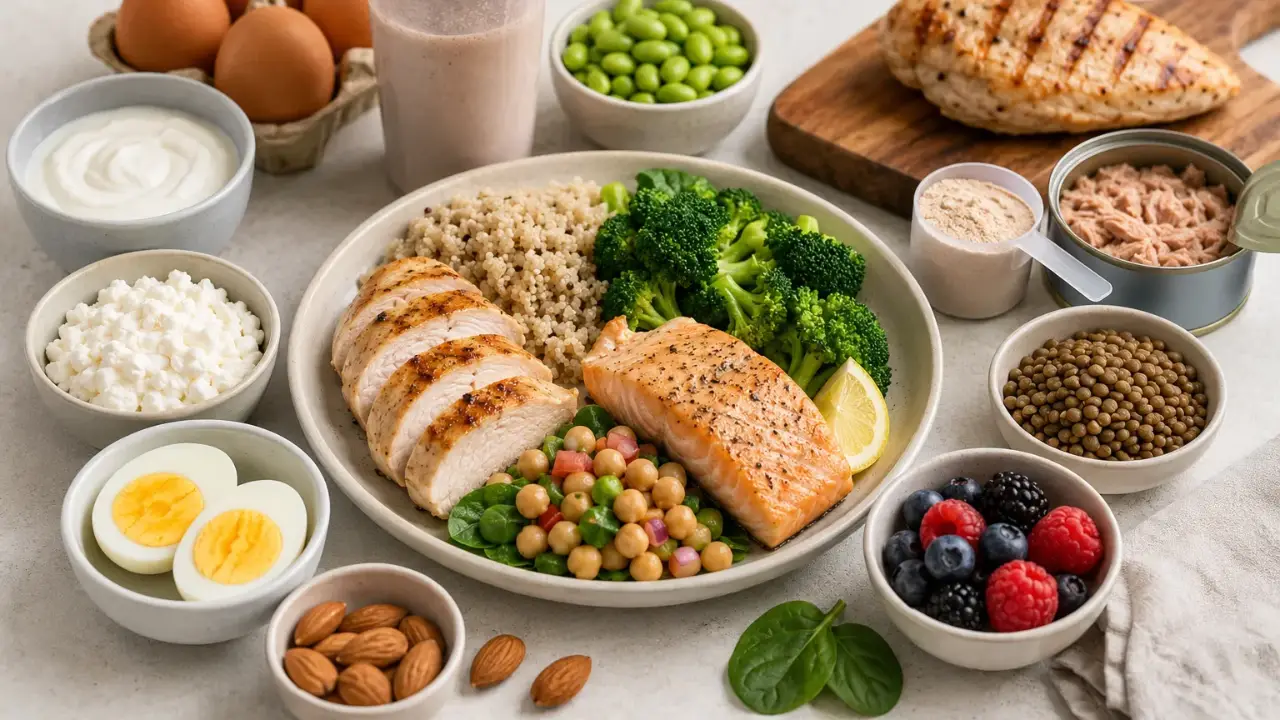
- Eat enough protein. Aim for at least 0.7 grams per pound of body weight per day. If you weigh 200 pounds, that's about 140 grams. (Yes, that's more than most people eat. Track it for a few days and you'll see.)
- Keep your calorie deficit reasonable. Ideally, no more than 30% below your total daily energy needs. Go deeper than that and your body starts pulling from muscle, not just fat.
- Strength train. This is the signal that tells your body to hold on to muscle while you're eating less. Walking is great, but it doesn't send that message.
So what's a realistic pace?
About 1 pound per week for women and 2 pounds per week for men is realistic, and it's sustainable. I know that sounds slow. (It is slow. That's the point.) A caveat, because it depends: if you have a lot to lose, the early weeks may run faster than that, and that can be normal. It's one more reason to have a professional looking at the whole picture instead of guessing.
Stop letting the scale be the only judge
The scale can't tell fat from muscle from water. It just says a number. So give yourself more than one way to measure:
- A smart scale that estimates body composition (use it for trends, not for any single day)
- Body measurements (waist, hips, thighs, arms)
- How your clothes fit
If the scale is flat but your waist is shrinking and your jeans are looser, you're winning. That's exactly what fat loss with preserved muscle can look like.
Consistency beats perfection, and it definitely beats fast. If you want help building a plan that gets you real fat loss without trading away your metabolism, fill out an interest form below. I'll personally reach out within one business day, and for most of our clients, the counseling is covered by insurance.
Rachel is a Registered Dietitian and the owner of Everwell Nutrition, an insurance-based nutrition practice serving Oklahoma for over 7 years. With 11 years of experience, she helps clients get to the root of their health challenges without extremes, and for most clients, counseling is covered by insurance.
Ready to get started with one of our dietitians? Most of our clients pay $0 using their insurance benefits!