3 Terms Anyone Trying to Lose Weight Should Know
Oct 01, 2026
There are three terms I wish everyone trying to lose weight understood: nutrient density, food volume, and calories. Let's break them down.
The three terms
Nutrient density is how much vitamins and minerals a food or meal gives you. A nutrient-dense food packs a lot of the good stuff your body needs. A nutrient-poor food doesn't.
Food volume is the space a food takes up. It's how much physical food is on your plate and in your stomach.
Calories are the amount of energy a food provides, independent of what's in it. A calorie tells you nothing about vitamins, minerals, or how full you'll feel.
A calorie is a calorie when it comes to energy. But calories don't all behave the same in your body when it comes to hunger. That's where the other two terms come in.
Fries vs. a baked potato with grilled chicken
French fries are nutrient poor, low in volume, and high in calories. That's the combination that leaves you hungry soon after you finish. Of course, I know they taste delicious (especially dipped in ketchup,) but they aren't going to be something to consume regularly if you are trying to lose weight.
A baked potato with grilled chicken on top is more nutrient dense, higher in volume, and lower in calories. More food on the plate, more nutrients, fewer calories, and you stay full longer.
Juice vs. whole fruit
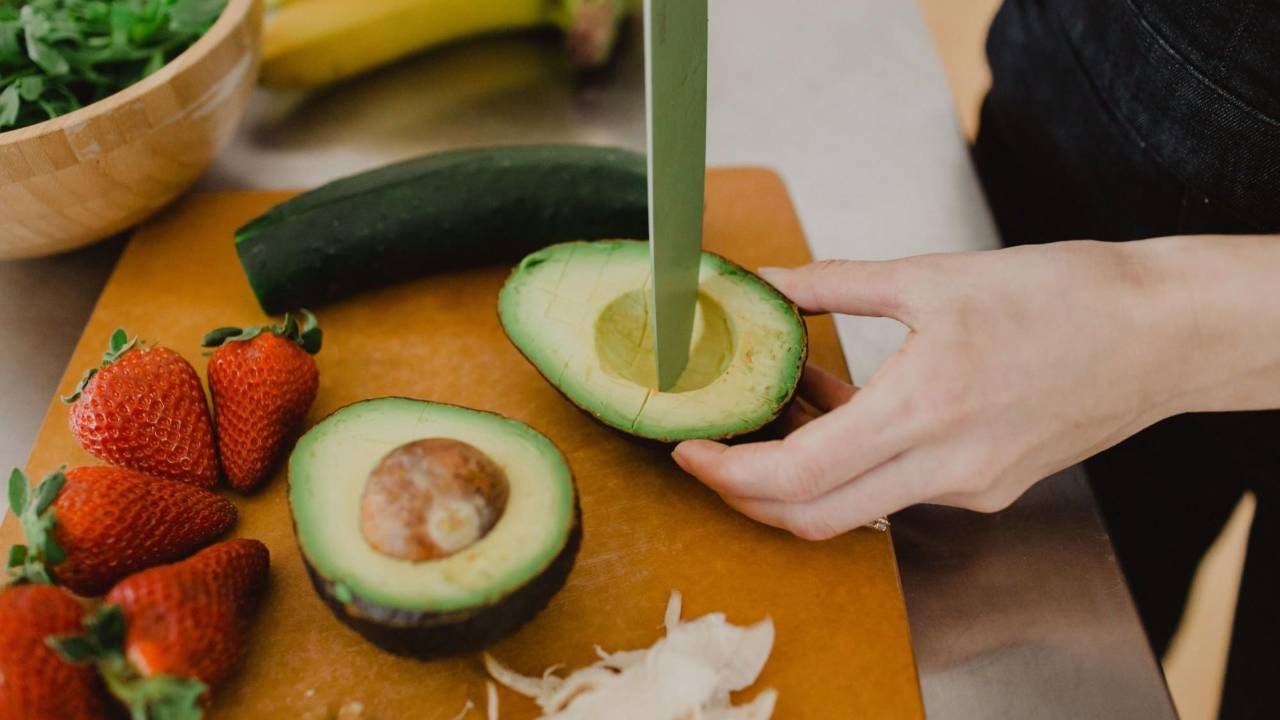
Same story. A cup of strawberries is much lower in calories than a cup of juice, takes up more space, and is more nutrient dense. You can eat the strawberries and feel like you ate something. A cup of juice disappears fast and leaves you wondering what's next.
Even "healthy" foods count
This is the one that surprises people. Take these three:
- 1 tablespoon of olive oil
- ¼ cup of walnuts
- 1 small avocado
They have roughly the same calories, and all three are nutrient dense. None of them is a bad choice, but the avocado has far more volume, so it fills you up more and keeps you satisfied longer.
Calories and nutrient density aren't the whole picture. Volume is the piece most people miss.
What this means if you're trying to lose weight
The more food volume you can get from nutrient-dense foods like fruits, vegetables, and other plant foods, the more success you're going to have. Why?
- You feel fuller and more satisfied for longer
- You get the vitamins and minerals your body needs to support you while you're eating less
- You're not white-knuckling hunger all day
Energy-dense foods do the opposite. They leave you hungry soon after eating them, and they don't deliver the micronutrients your body needs during weight loss.
So do you have to give up fun foods?
NO. Please don't hear that.
Fun foods can absolutely have a place. Just see them as foods you choose less often, and go in knowing you'll most likely be hungry again soon after. That's not failure. That's just how those foods work. Plan around it.
The goal is to choose high-volume, nutrient-dense foods as often as you can. Not every time. Consistency beats perfection, always.
If you'd like help building meals that keep you full while you lose weight, fill out an interest form below. I'll personally reach out within one business day, and for most of our clients, counseling is covered by insurance.
Rachel is a Registered Dietitian and the owner of Everwell Nutrition, an insurance-based nutrition practice serving Oklahoma for over 7 years. With 11 years of experience, she helps clients get to the root of their health challenges without extremes, and for most clients, counseling is covered by insurance.
Ready to get started with one of our dietitians? Most of our clients pay $0 using their insurance benefits!